


Metal Painting: Types of Coatings and How to Choose the Right One
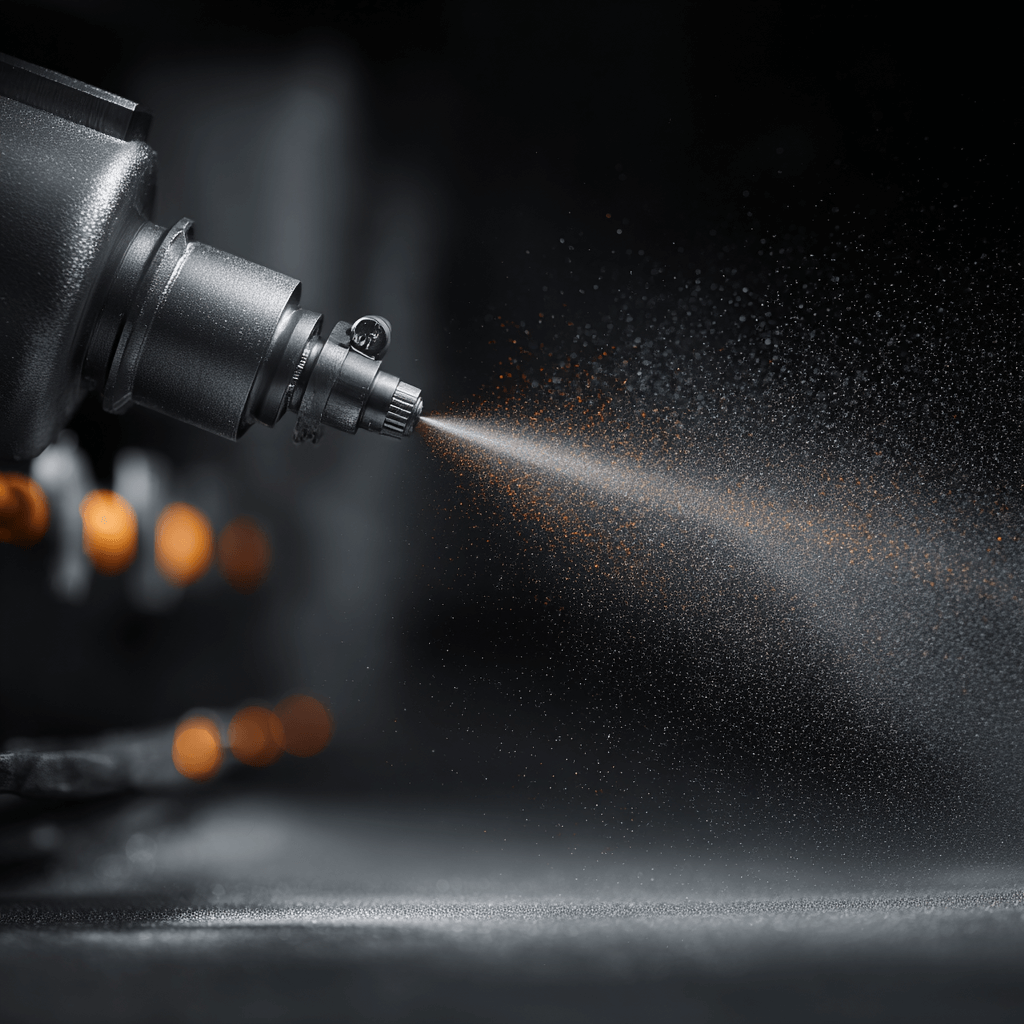
B2B metal painting is not about “making it look good.” It’s about the life of the part, corrosion resistance, stable operation in a real environment, and predictable maintenance costs. Most often, coating problems arise not because the “paint is bad,” but because of the wrong choice of system for the operating conditions or poor surface preparation.
In this article, we will analyze which metal coatings are actually used in industry, how they differ, what is critical in preparation, what defects occur most often, and how to choose a solution for your task without overpayments and rework.
Why paint metal: coating tasks in industry
A coating on metal usually has one or more functions:
protection against corrosion (moisture, salts, reagents, condensation), protection against chemical influences, protection against abrasion, heat resistance, electrical insulation or controlled electrical conductivity, stable appearance, and marking.
Another thing is practically important: the coating must work in a specific environment. What works well in a dry workshop can quickly “float” outside, in a damp room, or near chemicals.
What coatings for metal exist: briefly and to the point
Metal coatings are conventionally divided into organic (paints/varnishes) and inorganic (zinc, phosphating, etc.). In the production of parts, multi-layer systems are most often used, rather than “one paint”.
1) Powder coating
Powder coating is a polymer that is applied electrostatically and baked in an oven. It is chosen for its consistent thickness, good mechanical strength, and repeatability across batches.
When suitable:
housings, brackets, metal structures, parts with appearance requirements, average operating conditions.
Strengths:
Resistance to impact and abrasion at the household/industrial level, uniform layer, neat appearance, high repeatability.
Limitations:
does not always work for parts with complex geometry (hard-to-reach areas), requires heat resistance of the part for baking, not always optimal for aggressive chemistry without the correct soil system.
2) Liquid painting (wet paint)
Liquid painting is a broad group of systems: alkyd, acrylic, epoxy, polyurethane, etc. The advantage is that you can choose a coating for specific requirements: chemistry, temperature, ultraviolet, thickness requirements.
When it is suitable:
large parts, complex geometry, repair schemes, assemblies with specific requirements.
Strengths:
flexibility in systems, you can work with non-standard shapes and production constraints.
Risks:
Most often, quality failures are due to improper surface preparation, incorrect pauses between layers, or violation of application conditions.
3) Primer + finish (coating system)
In industry, the logic of “one coat and done” rarely works. The correct scheme is the system: surface preparation → primer → intermediate coat (if necessary) → finish.
Why primer:
it provides adhesion and basic anti-corrosion protection. Finish provides environmental resistance and appearance.
Practical conclusion:
if the part is working in moisture, outdoors, or in an aggressive environment, the “primer + finish” system is almost always more effective than just a decorative layer.
4) Zinc coatings (anti-corrosion protection)
Zinc plating works as a corrosion protection, often used as a base layer or a stand-alone method. It is used where maximum resistance to corrosive environments is the main thing.
When suitable:
outdoor use, high humidity, risk of contact with salts/reagents, long service life without maintenance.
Important:
zinc is not always a “panacea”, because subsequent layers and preparation must also be correct. Plus, there are limitations on geometry and surface requirements.
5) Phosphating and conversion coatings
This is a preparatory stage or undercoat that improves adhesion and corrosion resistance. It is often used as a technological base before painting in a series.
The point is simple:
the metal becomes more “prepared” for a stable coating, and the risk of delamination is reduced.
6) Special coatings
This includes systems for specific conditions: high temperatures, contact with oils/fuels, chemical resistance, increased wear resistance, anti-slip solutions.
This is a case when the coating is chosen not “according to the catalog”, but according to actual operation, and it is advisable to coordinate it with the technologist before launching the series.
How to choose the right coverage: logic without errors
To choose the right metal coating, you need to answer a few specific questions. This is much more effective than starting with the question of “powder or liquid paint.”
1) Where the part works: environment
A dry workshop, a wet area, the street, contact with salts, reagents, oils, fuel, abrasives — each factor changes the system.
Example:
a detail “inside a workshop” and a detail “outdoors by the road in winter” are different coatings, even if they look the same from the outside.
2) Temperature and changes
If the part is heated or there are temperature cycles, the coating must withstand expansion/contraction without cracking.
3) Mechanical influences
Impacts, abrasion, contact with tools, installation/dismantling, friction are areas where decorative systems “give up” quickly.
4) Geometry and manufacturability
Complex internal cavities, deep grooves, threads, seating surfaces—all of these must be taken into account. For example, threads are sometimes not painted or protected with masking.
5) Appearance and tolerance requirements
If the part has precise fit, you need to control the layer thickness and application areas. A bad solution is to “paint everything” and then sand it back.
Types of coatings: practical selection table
| System | When is logical | Key plus | Typical risk |
|---|---|---|---|
| Powder | series, stable appearance, average conditions | repeatability, strength | hard-to-reach areas, need for baking |
| Liquid (epoxy/PU) | complex form, specific conditions | flexibility for the task | errors in drawing and modes |
| Primer + finish | street/moisture/responsible details | resource and anti-corrosion | economy “on the ground” = exfoliation |
| Zinc + paint | aggressive corrosion | strong anti-corrosion | incorrect preparation/compatibility |
| Conversion layers | mass production | better adhesion | missing a stage = instability |
Surface preparation: the main thing that really affects the result
80% of coating problems are surface preparation. Poor paint application is often a symptom that the metal has not been properly prepared.
Critical things:
degreasing (oils, process fluids), removing scale and rust, controlling roughness (so that the coating “sticks”), cleaning from dust before application, correct pauses and drying/polymerization conditions.
If the surface after casting or machining is contaminated or too smooth, adhesion will be poor, even if “expensive paint” is used.
Typical coating problems and how to avoid them
Exfoliation
The most common cause is poor preparation, improper soil, or incompatibility of layers. The solution is a technological system and preparation control.
Sub-film corrosion
It looks like “bloating” or corrosion under the paint. The cause is moisture/salt has penetrated the layer through pores or weak areas. The solution is an anti-corrosion system and the correct thickness.
Smudges, craters, “orange peel”
These are application defects: mode, viscosity, temperature, dust. Solved by process discipline and correct application parameters.
Poor adhesion on sharp edges
The layer is often thinner at the edges, and that's where the destruction begins. The solution is geometry preparation, the right application system, and thickness control.
Thread and fit problems
The coating can “eat” the tolerance. The solution is to mask, partially paint, or embed these areas in the technology.
What determines the price and timing of metal painting
The cost of painting depends not only on the surface area, but also on the coating system and preparation.
The price is affected by:
type of coating (powder/liquid/primer system), number of layers, thickness requirements, geometry complexity, need to mask threads/seats, appearance requirements, operating conditions, batch size, and quality control.
The timing is influenced by: surface preparation time, technological pauses between layers, drying/polymerization, the need for repainting or local finishing touches.
Coating quality control: what makes sense to check
Coating control is not “check and send.” In industrial parts, it is important to control what affects the life.
The most common checks:
layer thickness, uniformity of application, adhesion, continuity of the coating in critical areas, appearance and defects, compliance with customer requirements for functional surfaces.
For mass production, repeatability is important: the same preparation, the same modes, stable materials, and control of input parameters.
FAQ: short answers to common questions
What coating is best for metal?
There is no one-size-fits-all. The right coating is determined by the environment, mechanics, temperature, and life requirements.
Powder coating or liquid coating - what to choose?
Powder is convenient for series and repeatability. Liquid is more flexible for complex parts and non-standard requirements. It is not the method that is more important, but the system and preparation.
Why is the paint peeling?
Almost always due to surface preparation, improper soil, or violation of layering and drying technology.
Is a primer needed before painting?
If there are corrosion risks or outdoor conditions, soil in most cases provides a sharp increase in the coating's service life.
How to protect metal from corrosion outdoors?
Usually, the system “anti-corrosion base + finish” works, sometimes with a zinc layer. But the solution depends on the environment and the resource required.
How to combine painting with plantings and carvings?
These surfaces must be coordinated: masked, not painted, or the coating thickness must be within tolerances.
What does the thickness of the coating depend on?
From the material system, application method and protection requirements. But “thicker” does not always mean “better” if the layer is not properly formed.
Can parts be painted after machining?
Yes, but critical surfaces must be properly protected and clean preparation must be ensured before application.
Conclusion
Correct metal painting is a combination of three things: an adequate coating system for the actual operating conditions, high-quality surface preparation and technology control. The most expensive solution is not always the best, and the cheapest often ends in peeling and repainting. If you need stability in the series, start with the input data: environment, mechanics, temperature, resource requirements and functional surfaces. Then select the coating system as an engineering solution, not as a decorative layer.