




Machine Building Parts: Which Requirements Are the Strictest and Why
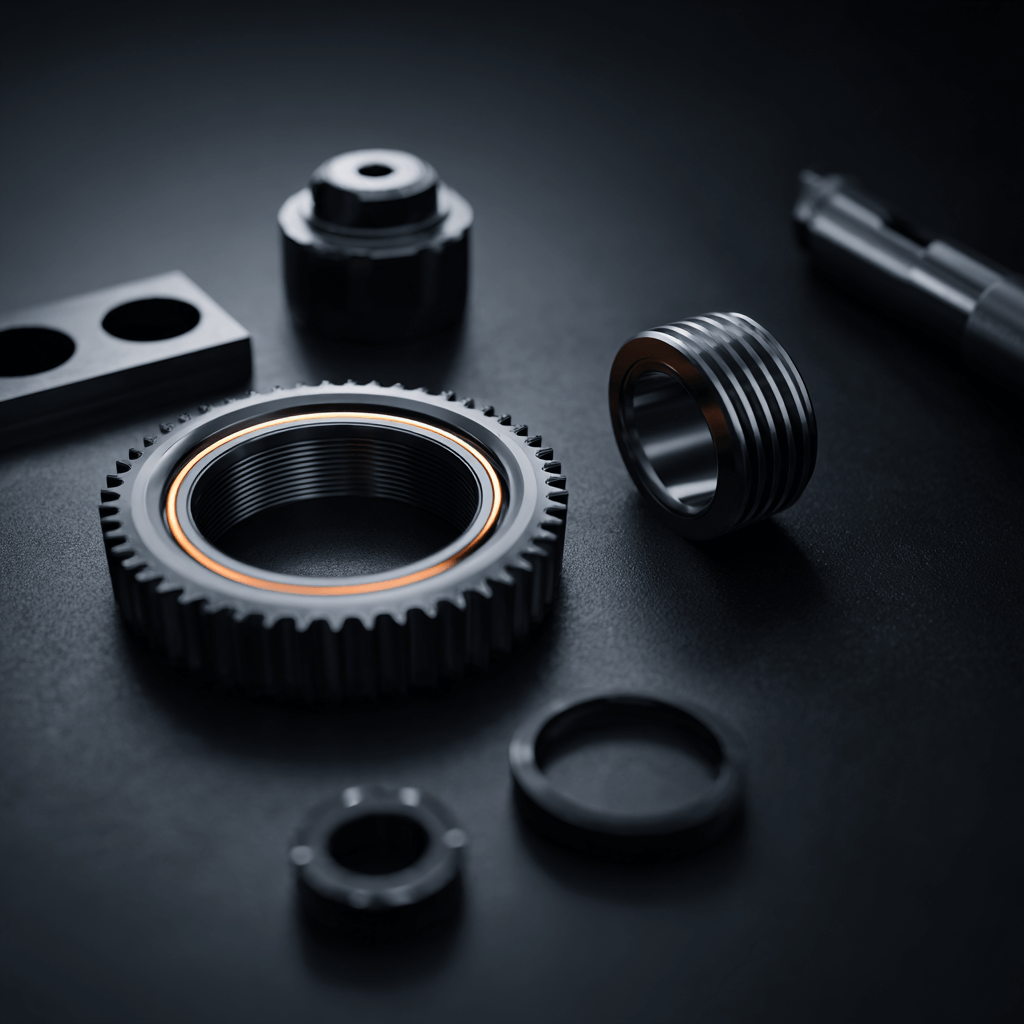
In mechanical engineering, a part is rarely “just a part.” It either becomes part of a unit that works for years without stopping, or it turns into a source of vibrations, overheating, batch defects, and expensive downtime. The most common cause of problems is not the material or the machine itself, but poorly formulated requirements: where a micron is needed, where a rough surface is enough, which areas are critical and which are not.
In this article, we will analyze what requirements for parts for mechanical engineering are usually the most stringent, why they “break” production, and how to correctly set the technical specifications for casting, machining, and quality control to obtain the predicted result in the batch.
What does “rigorous requirements” mean in mechanical engineering?
Strict requirements are not just “small tolerances”. They are any characteristic that affects the operation of a component and is difficult to consistently repeat in series. In mechanical engineering, such requirements are most often:
precise fit, surface geometry, roughness, batch-to-batch material stability, surface cleanliness, defect control and process repeatability.
Critical: The same part can have areas with different levels of importance. If you set “everything as accurately as possible,” you overpay. If you do not highlight critical areas, you risk assembling a unit that operates unstable.
The most stringent requirements #1: tolerances and fits (what goes together “in tension” or “in clearance”)
The fit determines how the parts are connected: with tension, with a gap, or transitionally. In mechanical engineering, it is fits that most often cause:
overheating of bearings, backlash, runout, noise, rapid wear, and failure of components.
Typical critical locations:
bearing seats, bushing holes, centering rings, coaxial holes, base planes for assembly.
Why it's tough:
Planning "doesn't forgive" variance in a series. Even if 8 out of 10 parts are made and 2 aren't, in production it's already a problem: sorting, reworking, stopping assembly.
Practical advice:
The drawing should show which holes and surfaces are functional (critical) and which are secondary. This simplifies control and reduces cost.
The most stringent requirements #2: geometry (flatness, parallelism, co-axiality, runout)
Geometry is what often “comes out” after machining or under load in the operation of the assembly. Even with the correct size, a part can be unusable due to geometric deviations.
The most critical parameters:
collinearity of holes, perpendicularity of planes, flatness of base surfaces, radial/end runout, parallelism of seating planes.
Why it's tough:
geometry depends not only on the machine, but also on:
basing, sequence of operations, internal stresses after casting, stiffness of the part, correctness of allowances.
A common mistake:
setting small tolerances on the geometry of all surfaces “just in case.” This dramatically complicates production and increases the percentage of defects without any real benefit.
Toughest requirement #3: Surface roughness (Ra) where there is friction or sealing
Roughness is not a cosmetic thing. It determines the surface's behavior during friction, tightness, and lifespan.
Where roughness is critical:
bearing seats, sliding surfaces, sealing surfaces, contact areas with cuffs, valve seats, cover fits.
What happens if the roughness is incorrect:
A surface that is too rough quickly wears out the friction pair or “tear” the seal, while one that is too smooth can impair the retention of lubricant in some components.
Practical logic:
roughness is set only where it affects work. On decorative or non-functional surfaces, overestimating it is a direct waste of money.
The most stringent requirements #4: material and stability of properties across batches
For mechanical engineering parts, it is not just “cast iron or steel” that is important, but the stability of properties from batch to batch: hardness, structure, strength, and impact toughness.
Why this is critical:
if parts in the same batch have different properties, you get instability: one part lasts for years, while another cracks or wears out many times faster.
What is usually controlled:
chemical composition, hardness, microstructure, sometimes mechanical tests - depending on the criticality of the component.
Particularly stringent requirements for the material arise when:
the part operates under impact, there is cyclic loading, the unit is highly responsible, repairs are difficult or downtime is very expensive.
The most stringent requirements #5: casting defects (which you can “not see”, but they will break the resource)
In cast parts, some defects may be hidden and appear only after processing or during operation.
Critical defects:
shrinkage sinks, internal porosity, cracks, uncooked/unpoured areas, non-metallic inclusions.
Why it's tough:
You can machine a part "to size", but it will have a weak spot inside. Under load, this often means sudden failure.
What really helps:
technological analysis of the casting design, the correct power supply system, mode control, and an agreed quality control plan.
Toughest requirement #6: Repeatability in a series (something that buyers often underestimate)
Even if a single sample turns out perfectly, this does not guarantee anything for the series. In mechanical engineering, the most painful indicator is repeatability: that 50, 200 or 1000 parts “fit” into the assembly without sorting and modifications.
What kills repeatability:
floating casting allowances, different melting/pouring modes, unstable processing due to incorrect basing, lack of technological discipline, various requirements that are not fixed at the start.
How is this solved:
the process must be described and stabilized: technological map, control of critical parameters, clear definition of bases and functional surfaces.
How to correctly formulate requirements for a part: a brief structure of the specifications
If you want production to proceed without “refinements” and the calculation to be accurate, the technical specifications must contain a minimum set of technical data.
What to include:
PDF drawing + 3D model (STEP/IGES), quantity (one-off or series), material or property requirements, critical fits, geometric tolerances (on key surfaces), roughness (where relevant), surfaces to be machined, coating requirements (if any), operating environment (humidity, temperature, abrasive), quality control plan, and required documents.
It is especially important to:
mark the bases from which the assembly is assembled, and the functional surfaces. This reduces the risk of “the part seems to be in size, but it doesn’t fit.”
What does the production process for mechanical engineering parts look like?
In mechanical engineering, a typical chain looks like this:
drawing analysis → material and critical requirements agreement → casting preparation → blank fabrication → cleaning and stabilization (if necessary) → machining → coating (if necessary) → quality control and laboratory testing → shipment.
Key point:
the earlier critical requirements are agreed upon, the less chance of getting rework at the machining stage, where “mistakes cost the most.”
Typical problems in mechanical engineering and how to avoid them
Problem 1: Parts do not assemble without fitting
Usually the reason is that the fits and geometry are not stable in the series or critical surfaces are not highlighted. The solution is to fix the bases, control key dimensions, and have stable allowances.
Problem 2: overheating, noise, vibrations in the assembly
Often the cause is runout, misalignment, incorrect roughness or misalignment of the fits. The solution is geometry control, correct tolerances on the functional surfaces.
Problem 3: cracks or rapid wear
The cause may be in the material, hidden casting defects, incorrect structure or choice of impact material. The solution is laboratory control, structure/hardness check, technological corrections on casting.
Problem 4: “sample ok, series floated”
The reason is the lack of technological stabilization. The solution is a coordinated technology for the series, repeatable modes and control of critical parameters.
Quality control: what to check so as not to overpay
Control should be tied to risks. In mechanical engineering, it is logical to divide control into three levels.
First level: geometry and dimensions after machining (fits, bases, critical holes, planes).
Second level: material (chemical composition, hardness, microstructure) - when the resource depends on it.
Third level: control of internal defects - when the part is critical or operates under high loads.
Практична порада:
не потрібно “контролювати все однаково”. Потрібно контролювати те, що може зламати вузол або серію.
What are the most stringent requirements for mechanical engineering parts?
Most often these are fits, geometry (alignment, runout), roughness on functional surfaces, material stability, and repeatability in a series.
Why are fits more important than “just the right size”?
Because the fit determines the actual operation of the assembly: clearance, tension, thermal conditions, backlash, and service life.
Why can a part be “in size” but not assembled?
Due to geometry: skew, runout, non-parallelism or incorrect bases during processing.
What most often causes vibrations and noise?
Runout, misalignment, misalignment of planes and errors in fit, sometimes material defects.
How to avoid problems in the series?
Fix critical surfaces and bases, coordinate the technology for the batch, and set control specifically for “risky” parameters.
Which casting defects are the most dangerous?
Internal porosity, shrinkage cavities, cracks, and inclusions may not be visible, but they reduce the resource.
When is laboratory control needed?
When the part is responsible, works under load, there are risks of fatigue/impact, and stability of properties within a batch is required.
Are small tolerances always necessary?
No. Small tolerances are only needed on functional surfaces. On others, it's just an extra cost.
Conclusion
The most stringent requirements for mechanical engineering parts are those that directly affect the operation of the assembly and are difficult to repeat in series: fits, geometry, roughness on functional surfaces, material stability, and defect control. To avoid defects and adjustments, it is critical not to “overdo everything,” but to correctly identify functional surfaces, set a logical control plan, and ensure repeatability of the process from the workpiece to the finished batch.