


Casting of cast iron goods for domestic consumption
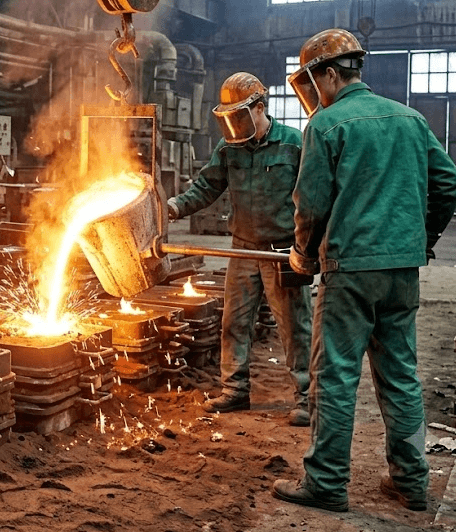
An Introduction to Cast Iron Casting
Cast iron casting is one of the most important processes in modern industry, enabling the manufacture of a wide variety of products, ranging from complex industrial components to household items. This process plays a significant role in the manufacture of consumer goods, as, thanks to its strength and corrosion resistance, cast iron has become a staple material for numerous applications.
Today, demand for high-quality cast iron products is growing steadily. Modern foundry production makes it possible to manufacture both small household items (for example, durable lock body), as well as heavy athletic equipment, including the classic cast-iron kettlebell, which is valued for its weighing accuracy and durability.
Types of cast iron, their properties and casting techniques
In industry, there are several main types of cast iron, which differ in their physical and chemical properties. The most common type is grey cast iron. It is considered a versatile material as it has excellent casting properties, the ability to absorb vibrations and good machinability.
Depending on the requirements for the end product, the Forward Systems plant uses various technologies:
- Sand-clay moulding (HTS and PGF): It offers tremendous design flexibility and enables the cost-effective production of both large components and mass-produced consumer goods.
- Die-casting and mould casting: guarantees maximum dimensional accuracy, minimal defects and a clean metal surface.
Cast iron products for the home, heating and the garden
Cast iron household items are not only practical but also energy-efficient. Cast iron’s unique heat capacity makes it indispensable for heating, cooking and setting up a barbecue area.
The products in greatest demand on the consumer goods market are:
- Cast iron stove — an essential component for traditional domestic stoves, cookers and hobs, capable of withstanding extreme temperatures without warping.
- Grate 300-350 mm (or standard grate bar 300–350 mm) — sturdy components of solid-fuel boilers, stoves and fireplaces, which ensure an even supply of air to the combustion chamber and support the weight of the fuel.
- Round grate bars — specialised configurations of grate bars used in cylindrical furnaces, potbelly stoves and certain types of heating boilers.
- Grill grate — a high-quality cast-iron grill for barbecues. Thanks to its even heat distribution, it ensures meat and vegetables are cooked to perfection without burning.
Trends, innovations and environmental considerations in the foundry industry
Modern cast iron casting is undergoing significant changes, driven by process automation and the optimisation of production costs. The introduction of new moulding technologies makes it possible to reduce the amount of machining required, which directly lowers the final cost of the product for the consumer.
From an environmental point of view, cast iron is one of the “greenest” materials, as it is 100 per cent recyclable. The use of modern filtration systems in European-standard factories minimises emissions into the atmosphere, making production safe for the environment.
Prospects for the development and procurement of cast iron castings in Ukraine
Despite global competition and fluctuations in the prices of raw materials (coke, iron ore), high-quality cast iron castings remain as relevant as ever. The combination of the metal’s traditional strength with computer-aided modelling of casting processes (CAD/CAM technologies) opens up new possibilities for creating ergonomic and aesthetically pleasing products.
Foundry «Forward Systems» offers professional services in the manufacture of cast iron products for domestic use. You can order standard items from our catalogue (grate bars, plates, grates), as well as bespoke casting based on your drawings or samples. We guarantee strict compliance with DSTU standards, high geometric accuracy and competitive prices direct from the manufacturer